

Based on the work of ArtsConnection Teaching Artist, Erin Orr.
In this project, students can:
- Explore character traits, emotions or actions
- Use their whole body and voice to show character
- Tell stories in which strong character movement and gestures are central to the story
Why choose this project?
Language and thinking opportunities unique to this project:
When making the puppet, students:
- Consider and represent character traits when they choose size and shape of facial features
- Build skills with scissors, folding, gluing sequencing of steps
When using the puppet to dramatize a character, students:
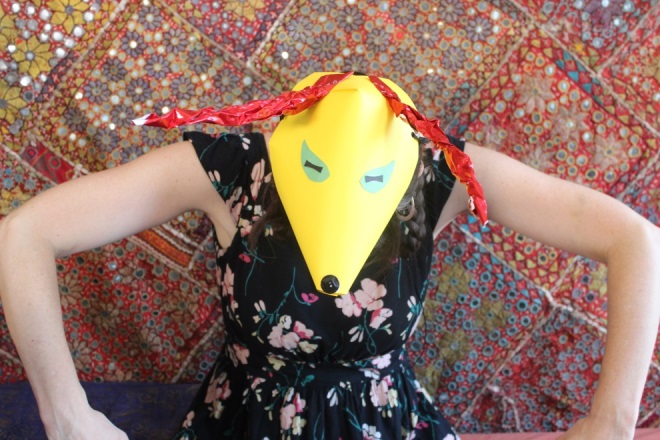
- Express character with full body and voice; the mask helps them imagine they are the character, without covering their faces
Speaking, listening and writing opportunities:
- Descriptive language (about puppet design choices; about physical and vocal expression choices; how they show characterization)
- Discussing character traits, emotions and actions
- Dialogue
Story concepts:
- Good for stories with dramatic physical actions and gestures, and animal characters
Grades:
- K-4
How To
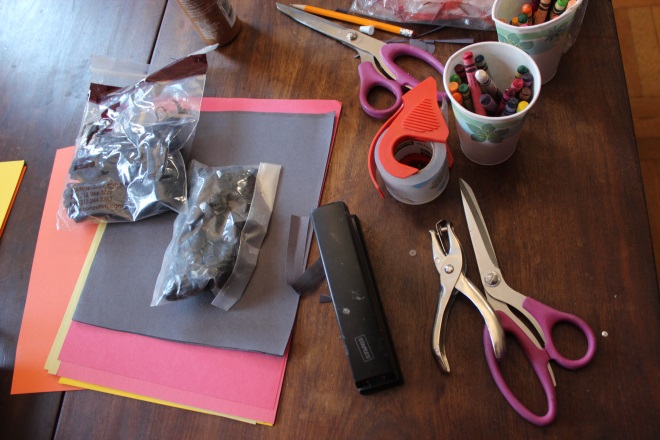
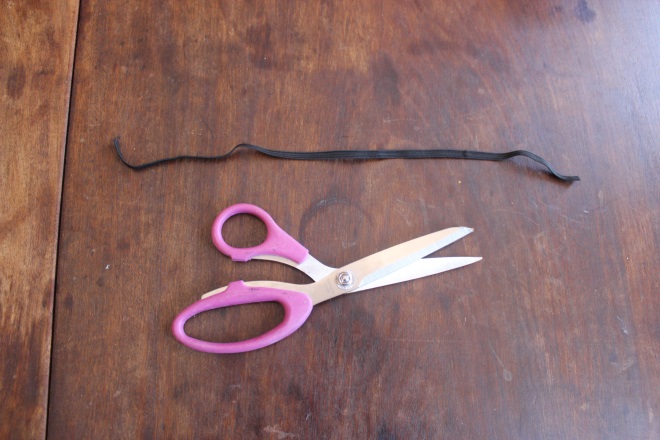
Materials: card stock, construction paper, elastic, hole puncher, stapler, scissors, cut shapes, feathers, glue; plus crayons/pencils/markers
Prep time: 60 minutes. (e.g. gather materials, cut shapes)
How much class time to make the puppet: one-two 45-50 minute period(s)
Grade differentiation:
Prep time: 60 minutes. (e.g. gather materials, cut shapes)
How much class time to make the puppet: one-two 45-50 minute period(s)
Grade differentiation:
- Kindergarten students will likely need some help cutting and folding the headdress shape, and cutting, folding and gluing on ears.
- 1st and 2nd grade students will be able to work more independently with cutting, folding and gluing.
- For 3rd and 4th graders, challenge them to design their own ears and features. Be sure to give them time to try out ideas and revise them.
- Adults will need to do the stapling and tying of elastic. Once complete, the headdress is very secure and should stay put on all students, even with lots of moving and acting out of characters. Students faces will be visible, even though they are wearing a mask!
Essential Steps of Project:
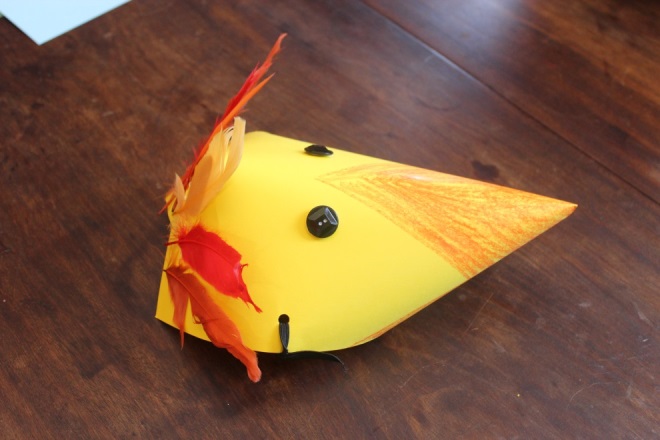
- Students draw and a color a beak and any other other fur, feather or scale texutre that is needed
- Students make one cut for back of head, in the middle of of the short side of the paper (1.5- 2 inches long)
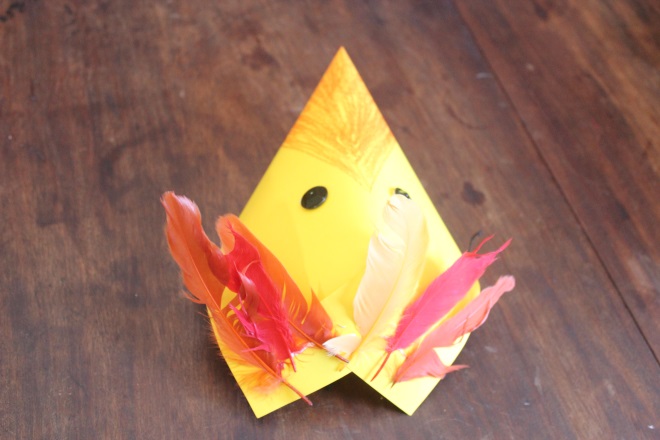
- Students fold the cut edge of the paper to create corner. The bottom edge of the paper should look like a “W”
- Teachers staple the fold
- Students roll the uncut edge of the paper into a cone.
- Teachers staple the cone (adjust the cone so that it comes to a sharp)
- Students choose size, shape and placement of eyes
- Students put one drop of glue for each eye and attach them
- Students collage or draw other textures for animal head
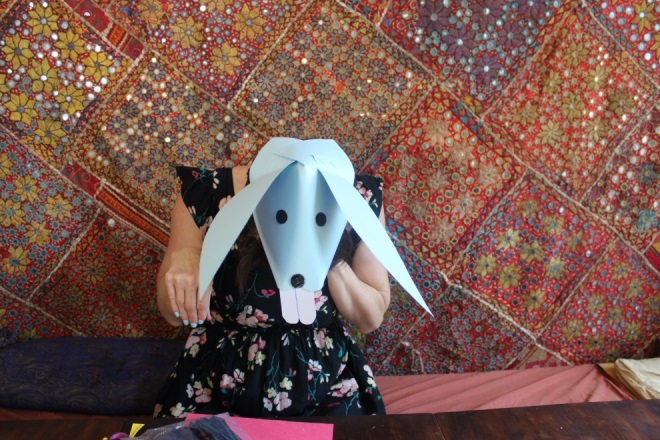
- Students make ears:
- Cut one ear shape and trace it to make two
- Use pencil/crayons/markers to add ear details and texture
- Fold a flap at the bottom for gluing
- Glue both ears onto headdress
Project Videos
Puppetry mentor Erin Orr demonstrates the key teaching steps of this project. This includes how to sequence instructions, what is most important to communicate to students, typical mistakes children make and how to preempt or respond to them. Young children can do more with their hands than you would expect if you know how to scaffold the steps!
There are many other options for Headdress puppet characters – demonstrated here.
Photos
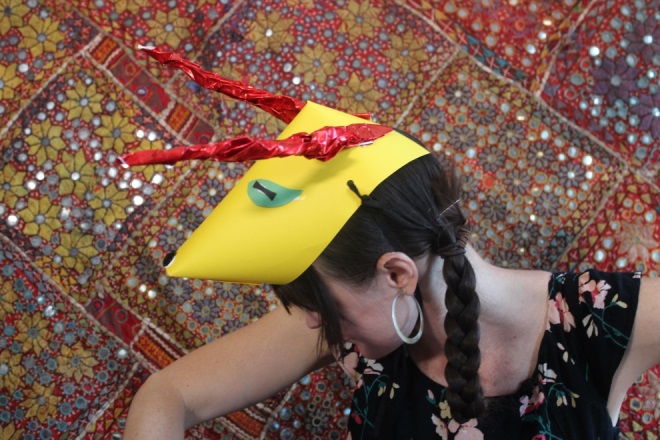
Dog headdress puppet:





 English
 Chinese (Simplified)
 Spanish